A river of rock beneath the moss
Where an eruption flowed, a tunnel remains — silent, vast, and full of color.
Table of Contents
Origins of Raufarhólshellir
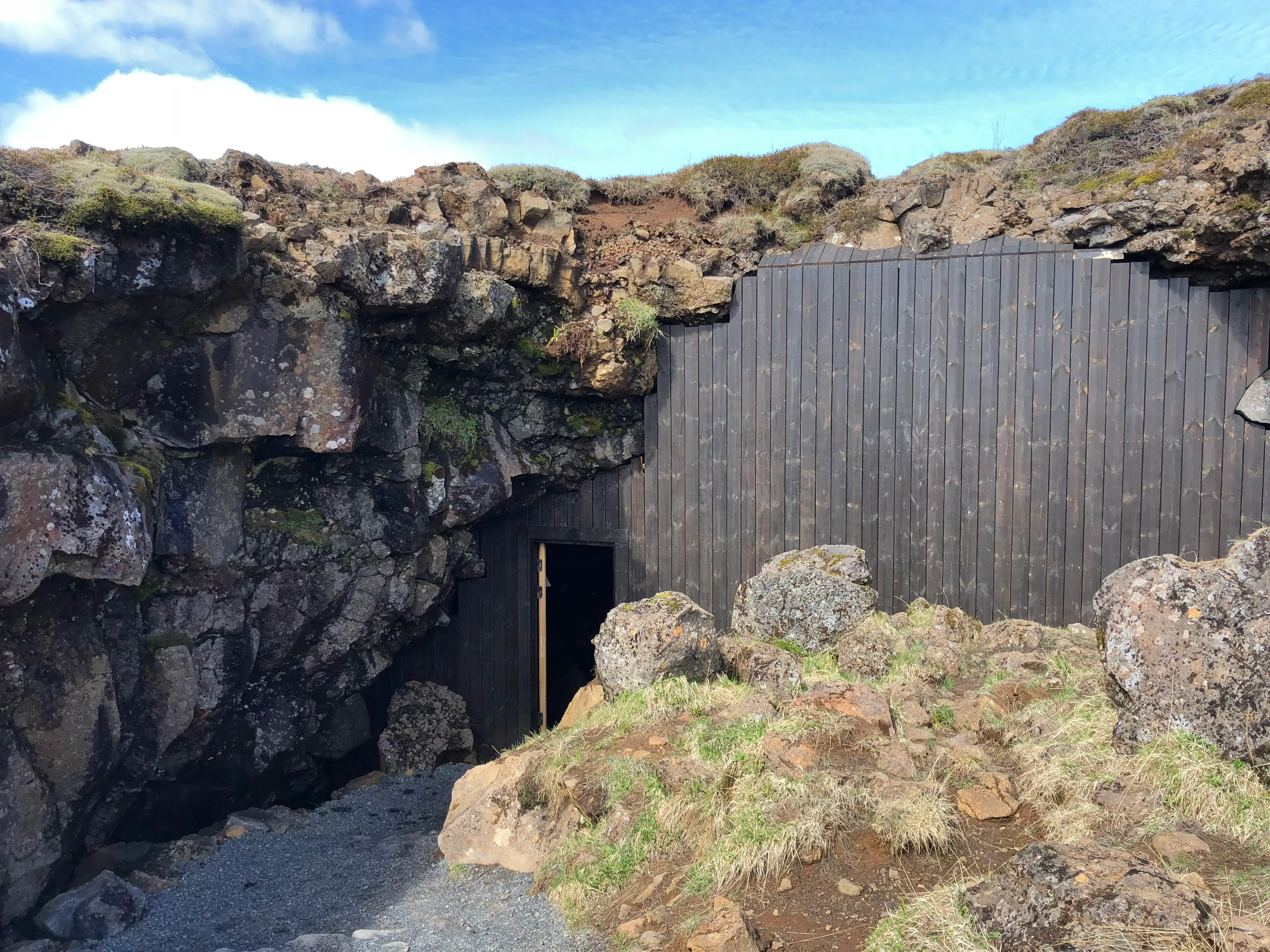
Raufarhólshellir is a lava tube — a hollow corridor left behind when an eruption sent a river of glowing rock through the landscape. As the outer skin cooled and hardened, the core kept flowing, draining away and leaving a cavern that today runs beneath moss, shrubs, and the occasional curious raven. The tunnel is one of Iceland’s larger and more accessible lava tubes, making it a rare chance to stand within the bones of an eruption without technical caving experience.
For centuries the tunnel lay mostly in quiet obscurity, known to locals and adventurous explorers. Modern paths, lighting, and guided routes now let visitors trace its curves and textures safely. Each bend reveals a new chapter — from smooth basalt drapes to jagged breakage where the roof surrendered to gravity. In winter, the story gains a shimmering epilogue: ice pillars rise from the floor like organ pipes, and frost paints delicate lace across the stone. It is geology, weather, and time performing together. ✨
Eruptions and lava tube formation
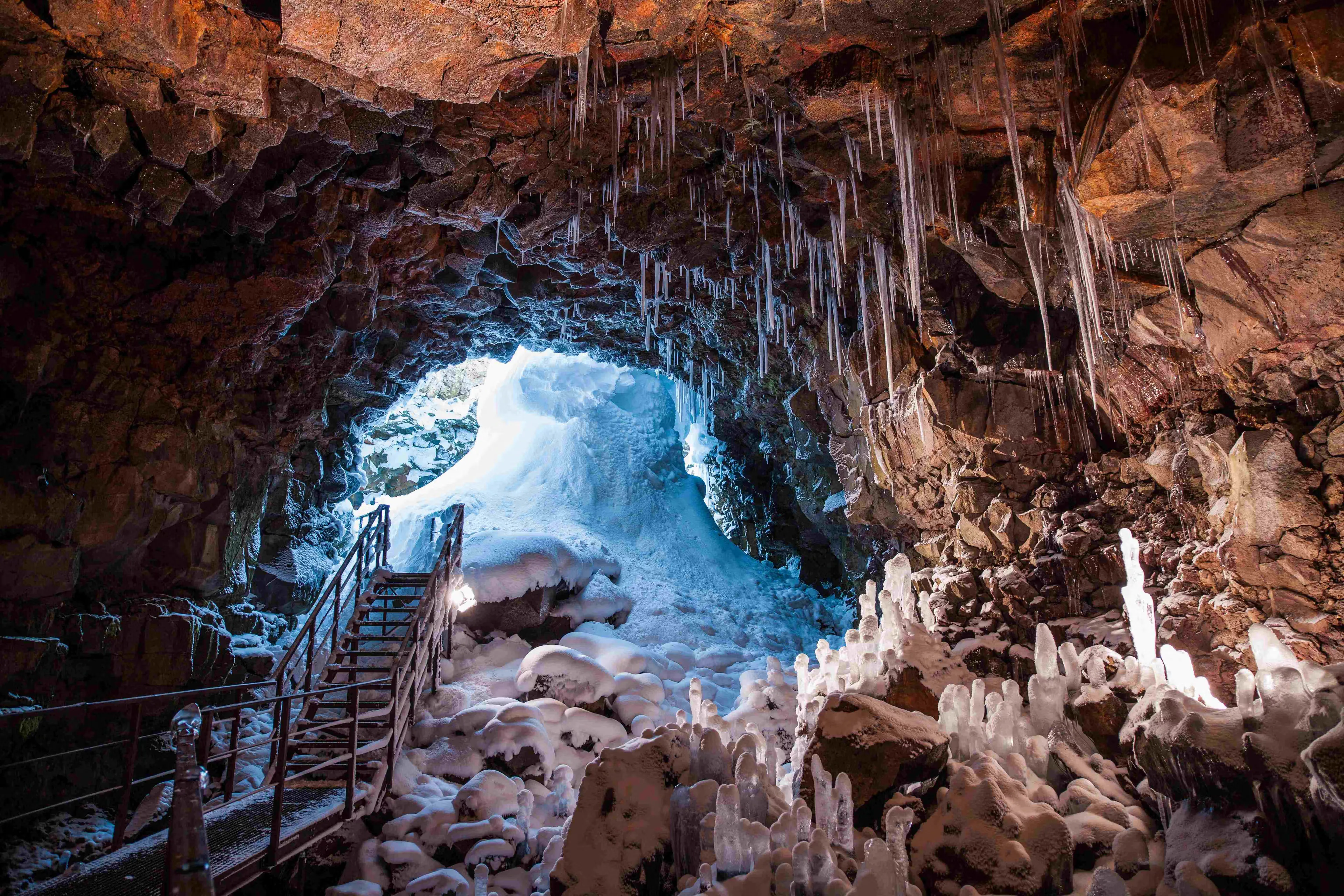
Lava tubes form when conditions align: the eruption must be hot and sustained, the flow steady enough to build a crust yet energetic enough to keep the molten interior moving. Imagine a river of rock slowing at the surface while the current underneath surges onward. The crust insulates the liquid lava, which races through the channel until the eruption wanes and the last of the molten rock drains away. What remains is a corridor in cross‑section — rounded, ribbed, sometimes two‑tiered where flows stacked upon themselves.
Inside Raufarhólshellir, those processes are written on every surface. Ropy pahoehoe textures ripple along the walls; flow lines mark changes in level; drips and frozen waves hang where the lava stalled and cooled. Even the colors are clues: a blush of red from iron oxidation, honeyed yellows and smoky purples where minerals left their fingerprints. Guides help you read this code, transforming a walk through shadow into a vivid narrative of physics and time.
Colors, minerals, and textures
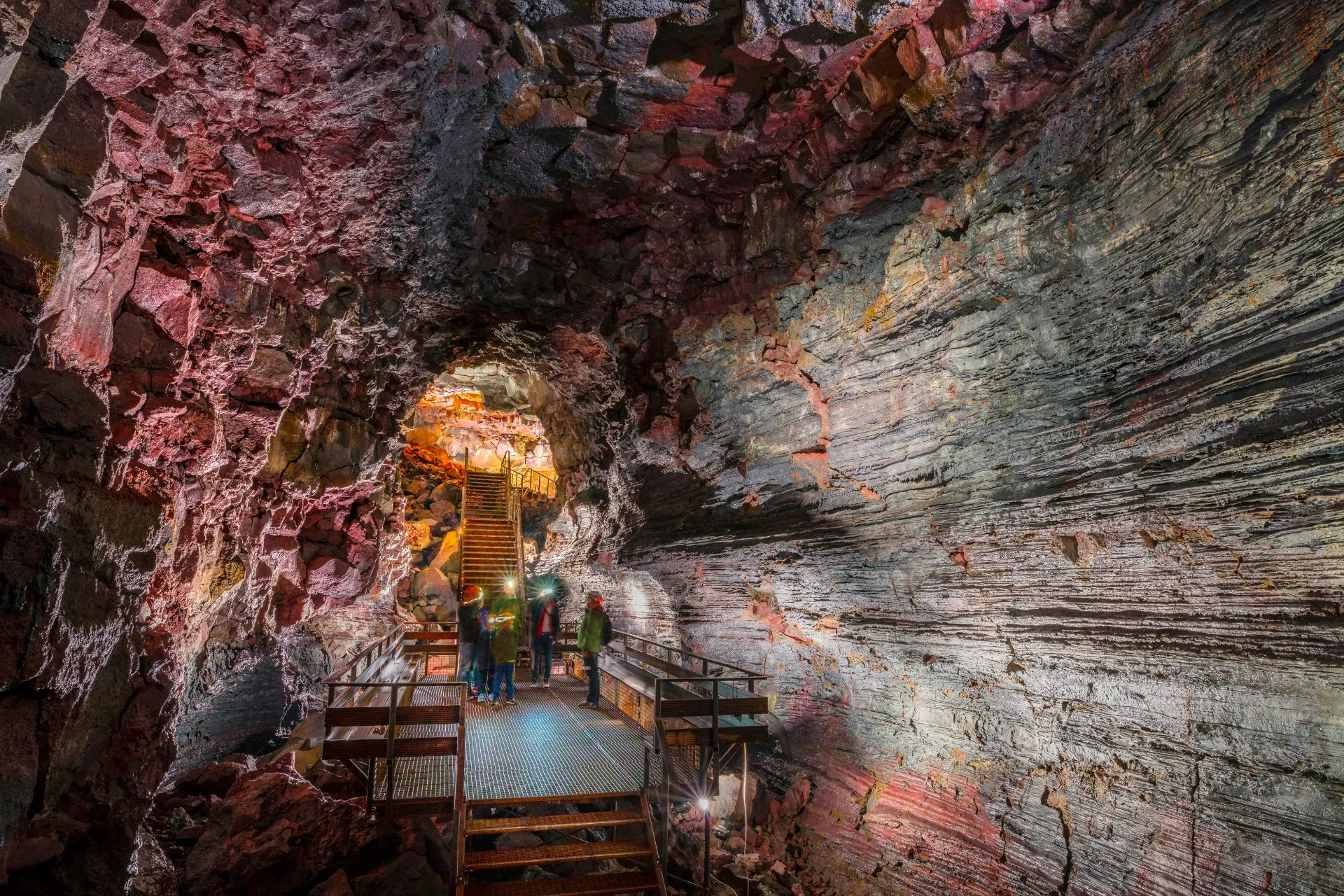
Basalt can surprise you. In daylight or warm lamp glow, the rock reveals subtle palettes: tawny ochres, charcoal gradients, rusted reds, and occasional lavender tones where mineral veils settled on cooling stone. These colors aren’t paint — they are the chemistry of the eruption and the air, set gently over thousands of surfaces. The result is a natural gallery where every wall feels like an abstract canvas.
Textures complete the experience. Ropes and ridges mark rolling currents; glassy skins hint at sudden chills; jagged edges recall roof collapses. In places you can see where multiple flows stacked like pages in a book, each with its own margin notes. It’s geology you can touch with your eyes, and the guides light it just enough for the story to feel intimate rather than vast.
Skylights, collapses, and ice
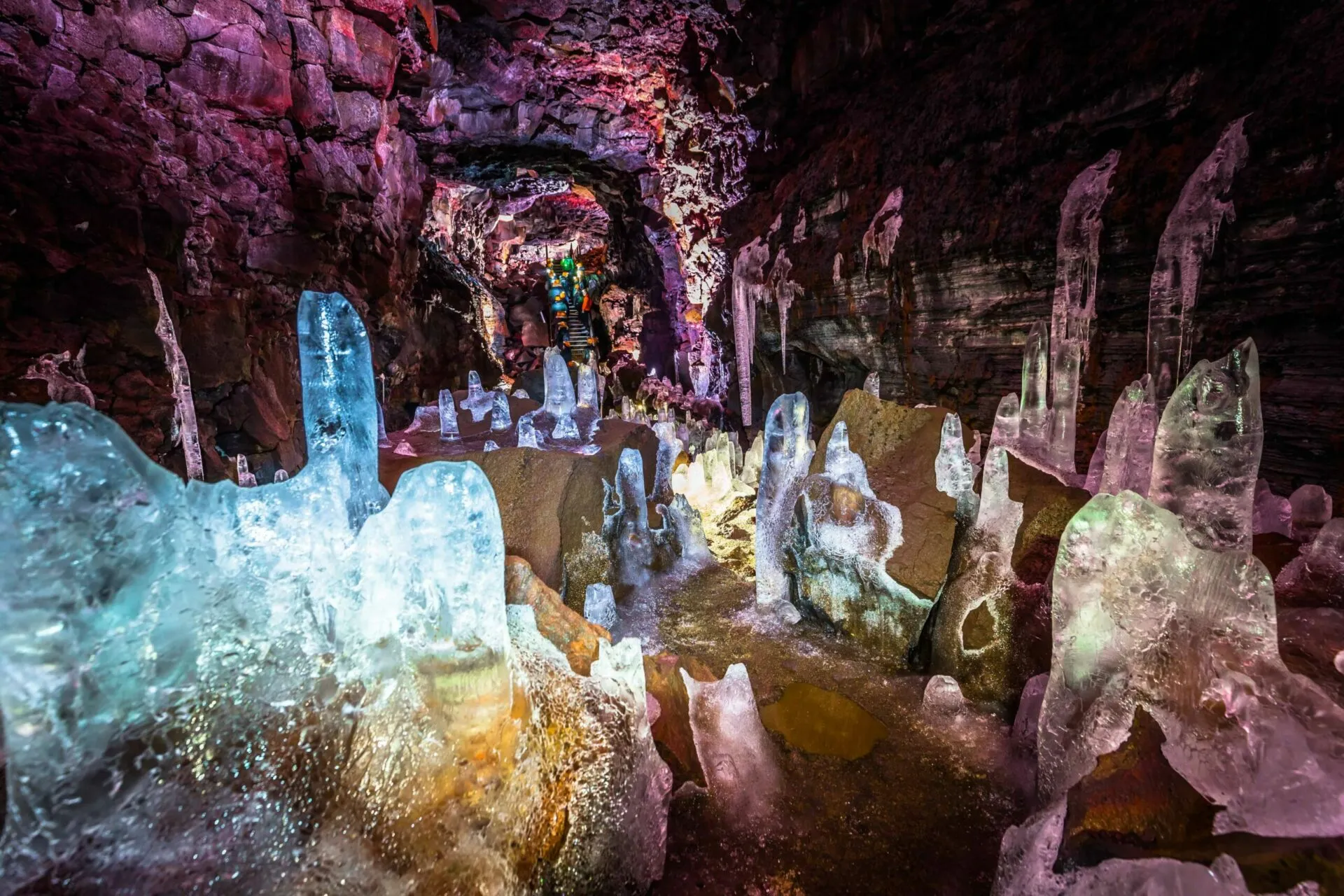
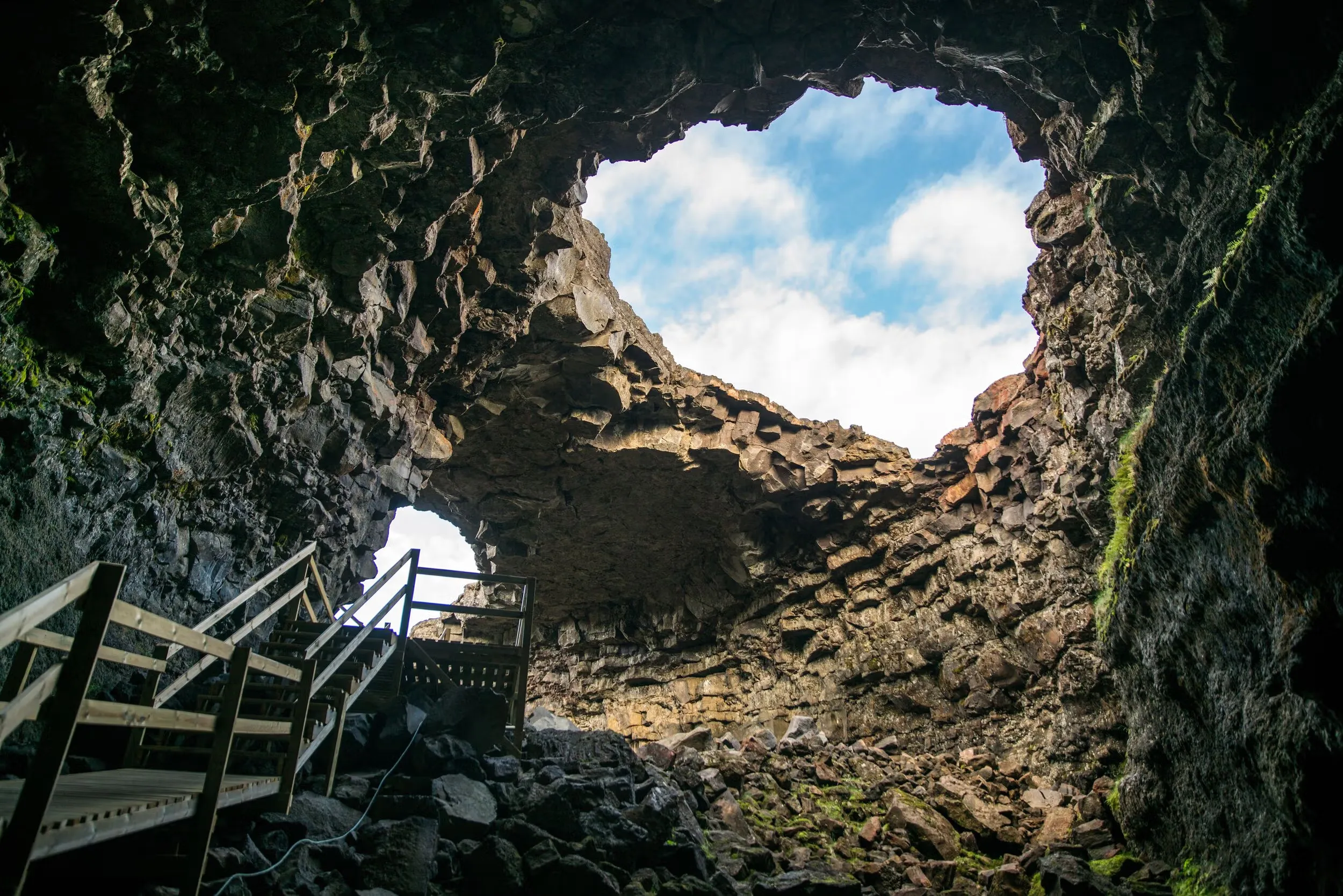
Where the roof collapsed, the tunnel opens to the sky. These skylights bring in sunbeams, snowflakes, and a living connection to the surface. In summer, soft daylight pours down, revealing mineral bands in warm tones. In winter, the same openings invite cold air that sculpts delicate ice pillars and frost. The cave becomes quietly theatrical — ice resonates with footfalls, and breath hangs silver in the air.
Guided routes are designed around these features, balancing safety and spectacle. The most accessible sections showcase skylights and ice when conditions are right, while extended tours explore farther where terrain allows. Every visit is a little different, shaped by weather, light, and the season’s mood.
Life above the tunnel
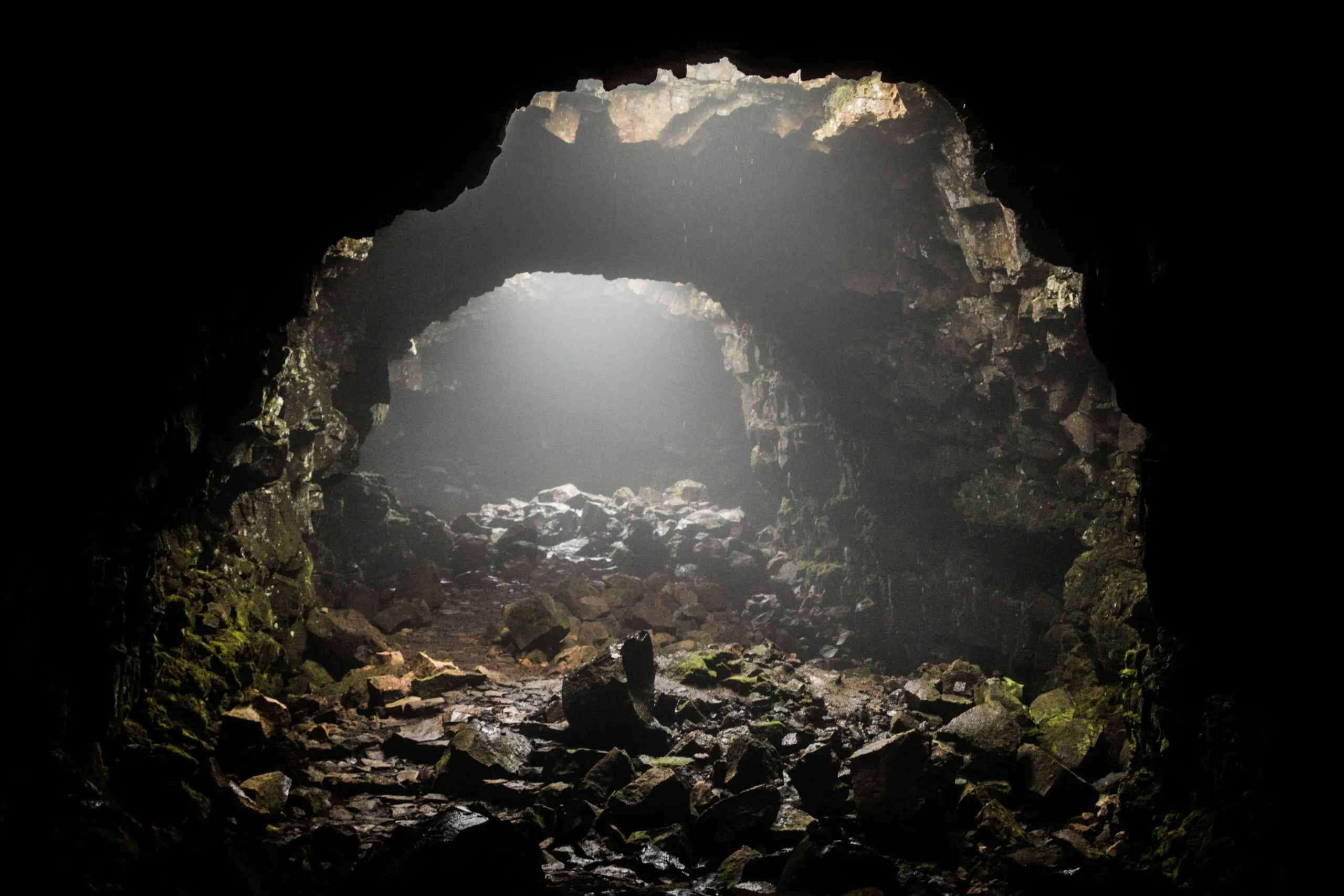
Above the cave lies a typical Icelandic lava field: moss stretching over hummocked stone, wildflowers in short summers, wind writing quick poems across the landscape. Foxes, ravens, and hardy insects patrol the surface while the tunnel below keeps its cool. It’s a layered ecosystem — subtle yet resilient.
Guides often encourage a moment at the skylights to look up and out. It’s a gentle reminder that this underground world is part of a larger living place — weather, light, moss, and rock sharing a quiet conversation over decades.
Walking the cave with guides
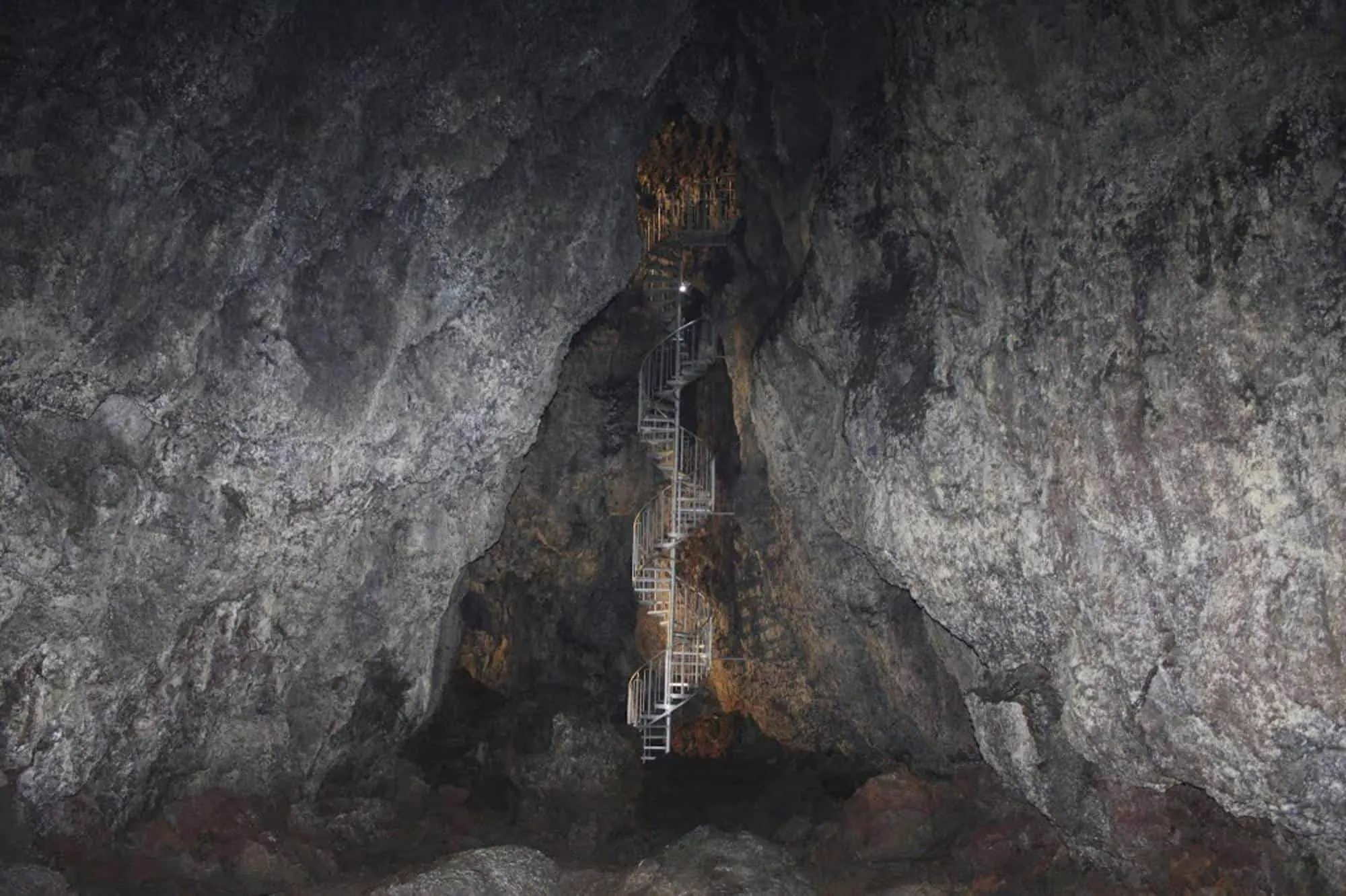
Tours keep the experience comfortable and informative. You’ll meet at the base, gear up with a helmet and light, and follow a prepared path through the most beautiful and stable sections of the tunnel. The pace is easy; the storytelling thorough. Expect pauses to appreciate colors, textures, and the physics of lava flow.
Extended tours may visit deeper areas, adding time and terrain complexity. Your guide will set expectations before departure, including notes on footing, clothing, and seasonal variations. Safety isn’t a side topic here — it’s part of the narrative, woven through with respect for the cave.
Getting there and seasons
Most visitors drive from Reykjavík via Route 1 and Route 39. In summer, roads are straightforward; in winter, plan for slower travel and check conditions. Tours operate year‑round with adjusted schedules — ice formations are common in colder months and summer offers brighter skylight scenes.
If you prefer not to drive, guided transfers and pick‑ups are available from central Reykjavík. Book early for weekends and holidays.
Safety, equipment & accessibility
Cave floors are uneven and can be slippery. Tours provide helmets and lights; warm layers and sturdy footwear are essential, especially in winter. Guides pace the route, point out potential hazards, and choose viewing spots with care.
Wheelchair access is limited due to natural terrain. If mobility or sensory needs are part of your planning, contact the operator in advance to discuss current options and support.
Culture, science & local stories
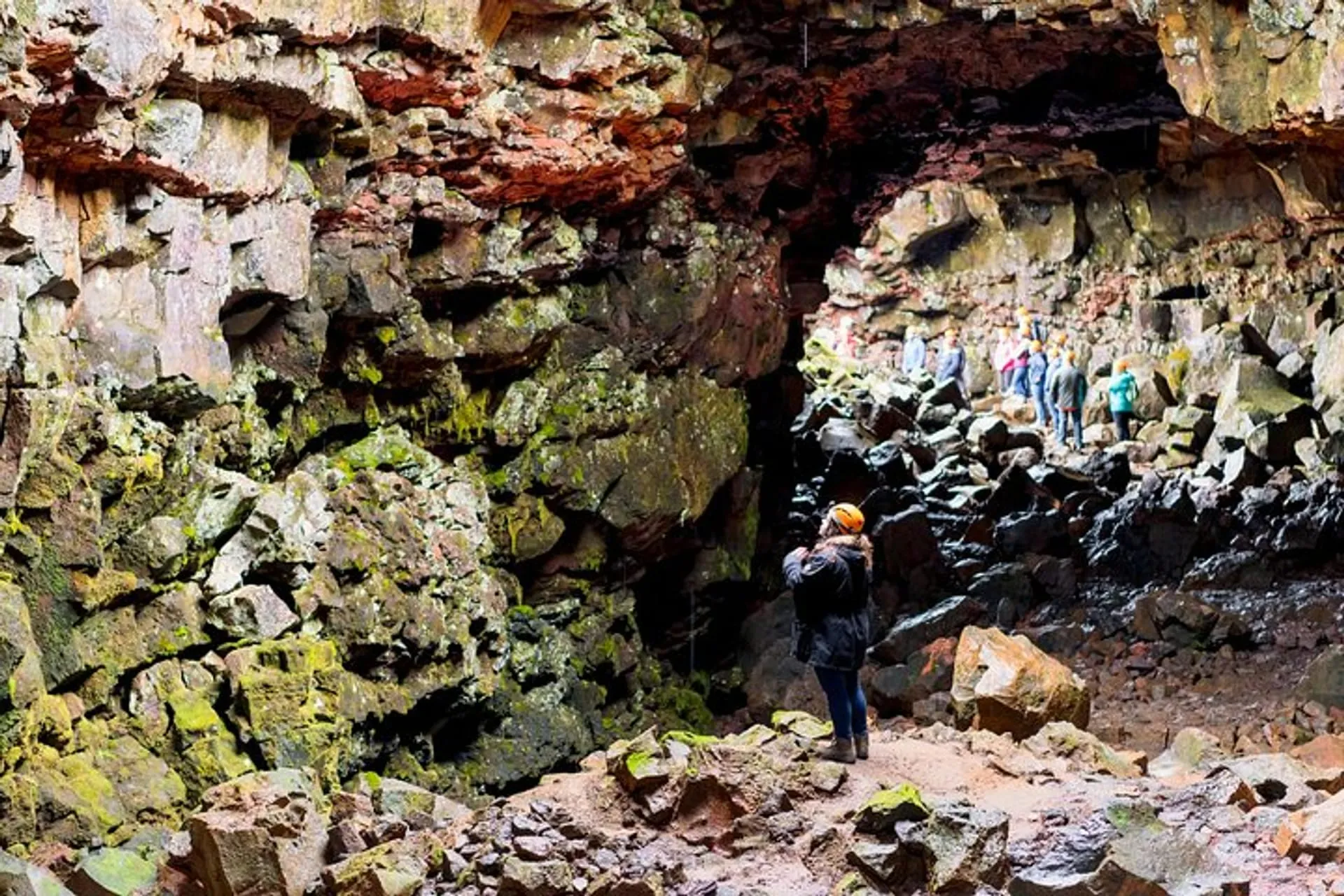
Icelanders have long navigated between everyday life and extraordinary landscapes. Lava tubes are part of that heritage — places of curiosity, caution, and learning. Modern tours blend cultural context with science so that a cavern becomes more than spectacle; it becomes a classroom under stone.
You’ll hear about the eruption that formed the tunnel and how people explored it over time, from early locals to today’s trained guides. It’s a living story, still being written with every visit.
Tickets, timing & tours
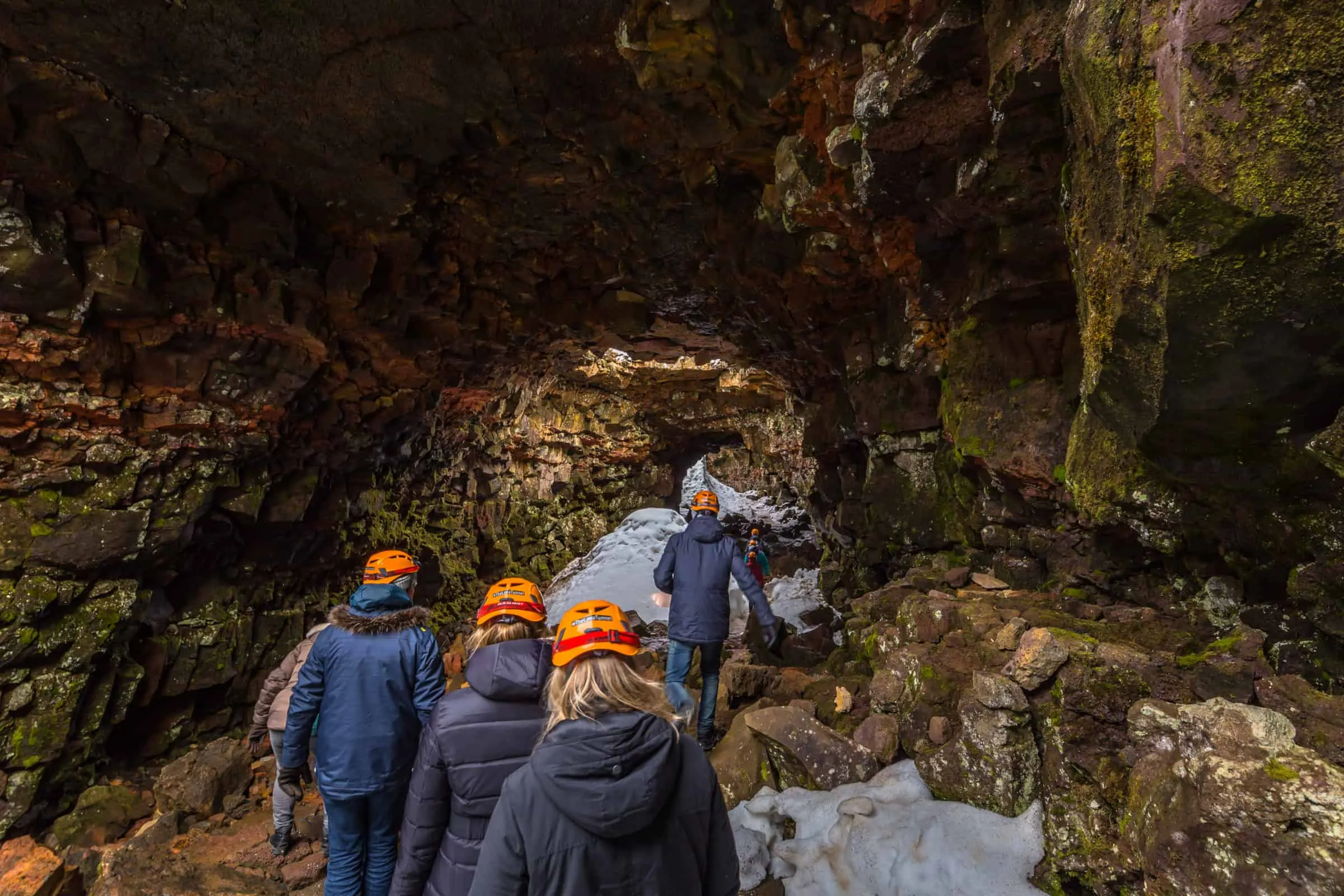
Pre‑book timed entries, choose between standard and extended tours, and add Reykjavík pick‑up if needed. Arrive 15 minutes early; late arrivals may need rescheduling.
Tour commentary is offered in multiple languages; check availability when booking. Group rates and private departures can be arranged in advance.
Preservation & responsible travel
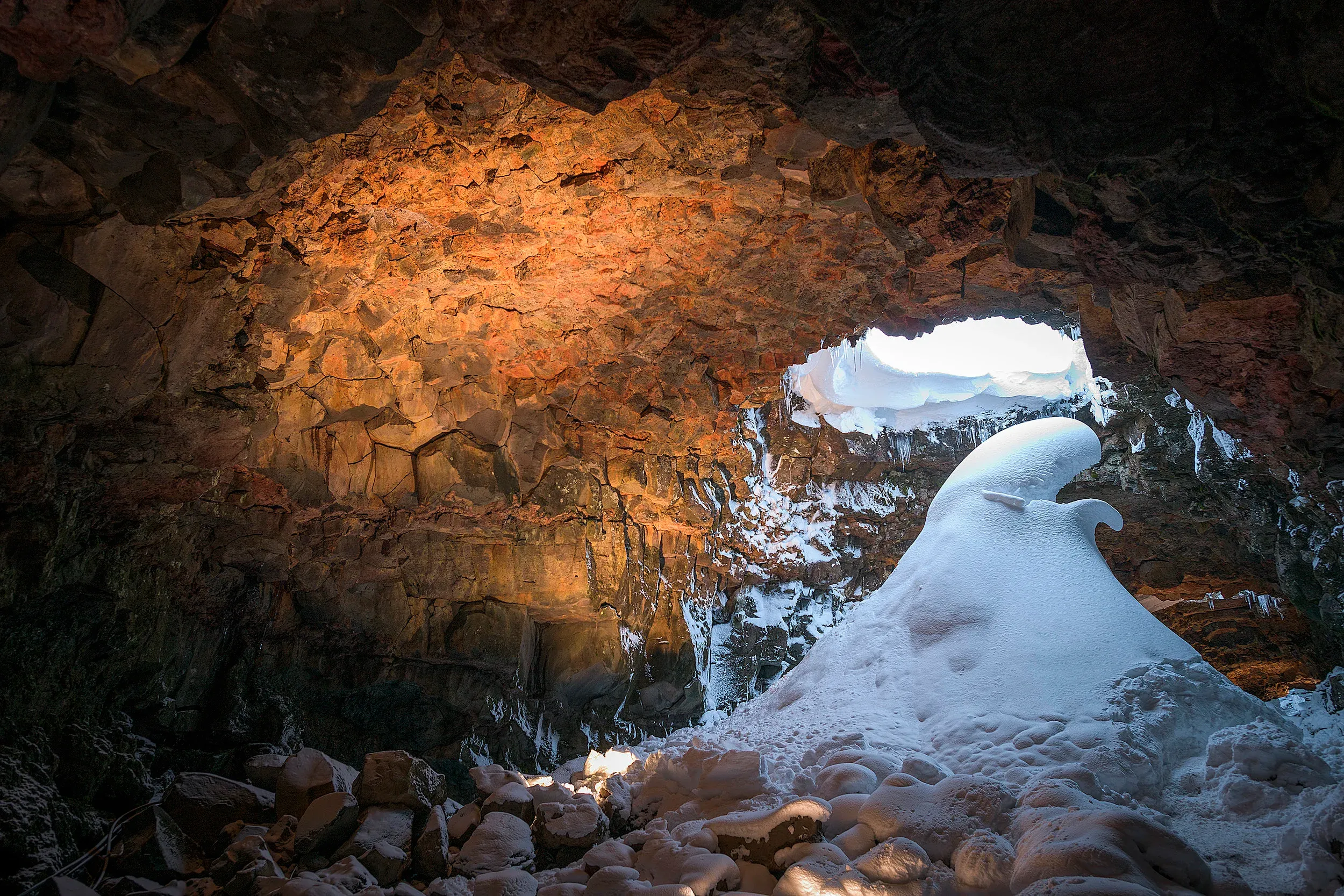
Stay on marked paths, follow guide instructions, and leave the cave as you found it. Basalt formations and seasonal ice are delicate — a little care keeps the experience beautiful for everyone.
Responsible travel also means planning for weather, choosing appropriate routes, and giving yourself time. Patience is a virtue in Iceland; it’s how you let the landscape show its best.
Nearby sights in South Iceland
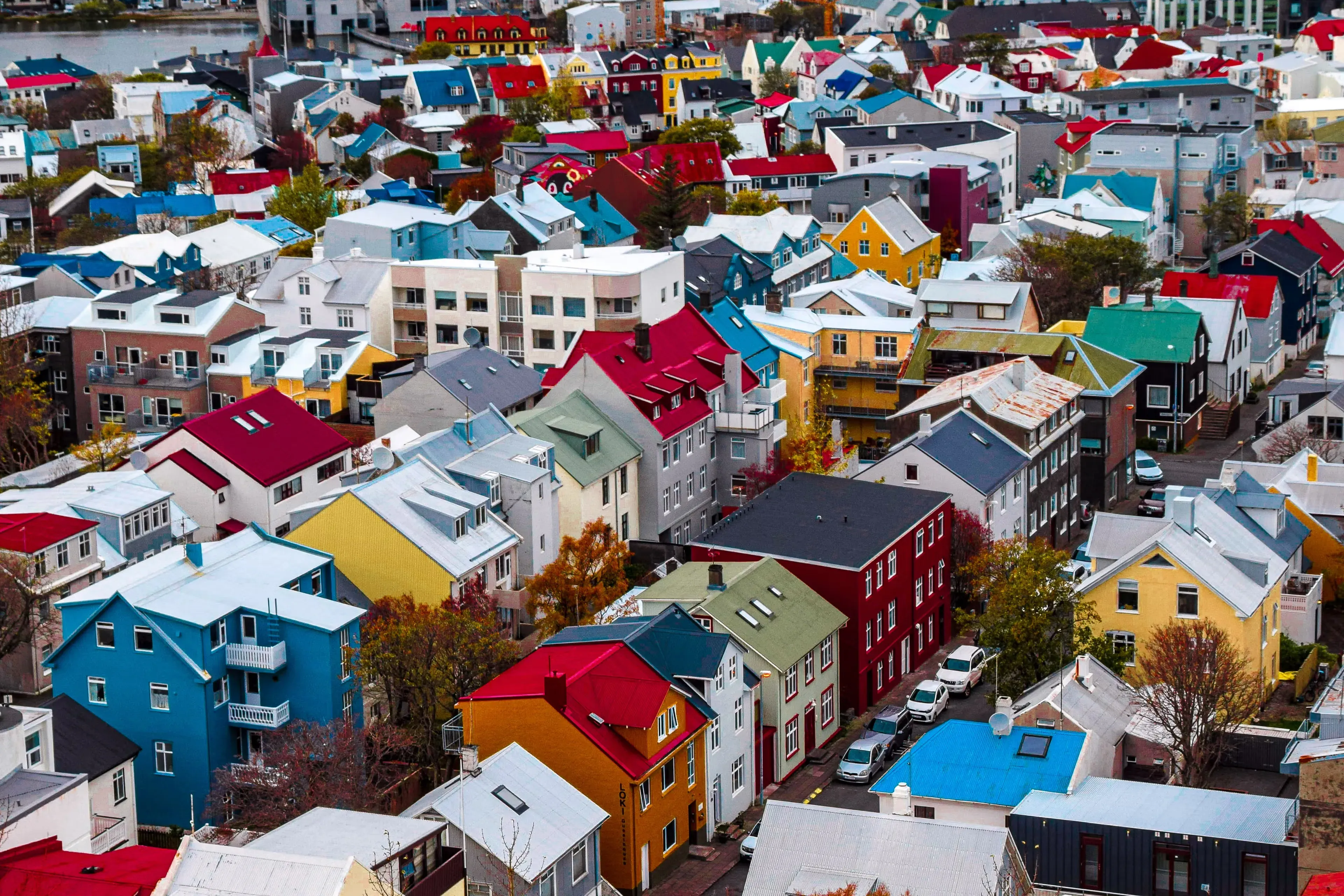
Combine your tunnel visit with other nearby highlights: the Reykjadalur hot‑spring valley near Hveragerði, coastal viewpoints, or a relaxed loop toward Selfoss with cafés and bakeries.
Further east, classic day‑trip stops include waterfalls and black‑sand vistas. The Lava Tunnel pairs well with a broader exploration of Iceland’s southern routes.
Why lava tubes matter
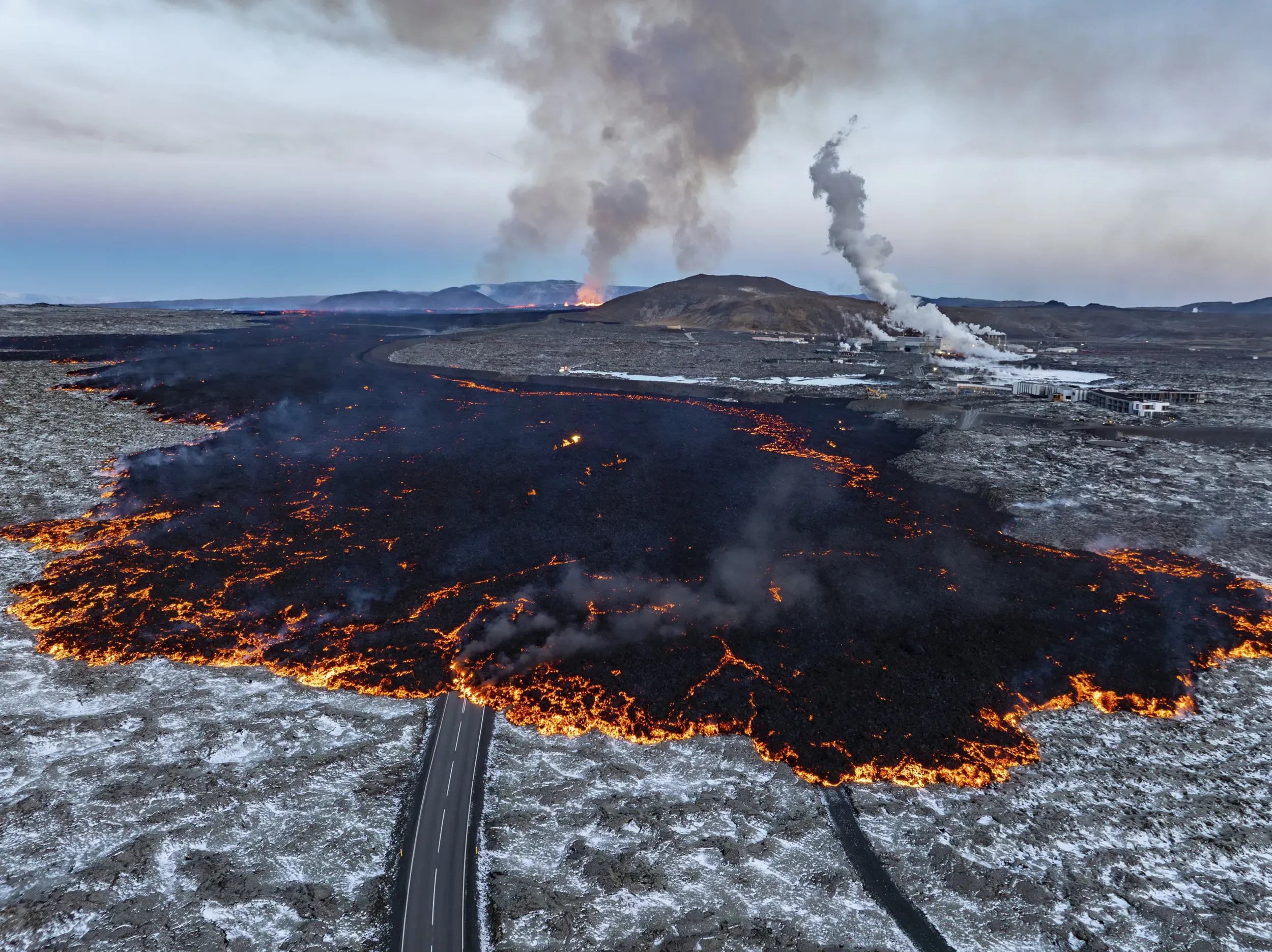
Lava tubes are archives of an eruption — spatial records showing where rock moved, cooled, and collapsed. They reveal the choreography of heat and time in a way no textbook can.
Standing inside one is humbling. You feel how landscapes are written, not just drawn: slowly, powerfully, and sometimes with breathtaking artistry.
Table of Contents
Origins of Raufarhólshellir
Raufarhólshellir is a lava tube — a hollow corridor left behind when an eruption sent a river of glowing rock through the landscape. As the outer skin cooled and hardened, the core kept flowing, draining away and leaving a cavern that today runs beneath moss, shrubs, and the occasional curious raven. The tunnel is one of Iceland’s larger and more accessible lava tubes, making it a rare chance to stand within the bones of an eruption without technical caving experience.
For centuries the tunnel lay mostly in quiet obscurity, known to locals and adventurous explorers. Modern paths, lighting, and guided routes now let visitors trace its curves and textures safely. Each bend reveals a new chapter — from smooth basalt drapes to jagged breakage where the roof surrendered to gravity. In winter, the story gains a shimmering epilogue: ice pillars rise from the floor like organ pipes, and frost paints delicate lace across the stone. It is geology, weather, and time performing together. ✨
Eruptions and lava tube formation
Lava tubes form when conditions align: the eruption must be hot and sustained, the flow steady enough to build a crust yet energetic enough to keep the molten interior moving. Imagine a river of rock slowing at the surface while the current underneath surges onward. The crust insulates the liquid lava, which races through the channel until the eruption wanes and the last of the molten rock drains away. What remains is a corridor in cross‑section — rounded, ribbed, sometimes two‑tiered where flows stacked upon themselves.
Inside Raufarhólshellir, those processes are written on every surface. Ropy pahoehoe textures ripple along the walls; flow lines mark changes in level; drips and frozen waves hang where the lava stalled and cooled. Even the colors are clues: a blush of red from iron oxidation, honeyed yellows and smoky purples where minerals left their fingerprints. Guides help you read this code, transforming a walk through shadow into a vivid narrative of physics and time.
Colors, minerals, and textures
Basalt can surprise you. In daylight or warm lamp glow, the rock reveals subtle palettes: tawny ochres, charcoal gradients, rusted reds, and occasional lavender tones where mineral veils settled on cooling stone. These colors aren’t paint — they are the chemistry of the eruption and the air, set gently over thousands of surfaces. The result is a natural gallery where every wall feels like an abstract canvas.
Textures complete the experience. Ropes and ridges mark rolling currents; glassy skins hint at sudden chills; jagged edges recall roof collapses. In places you can see where multiple flows stacked like pages in a book, each with its own margin notes. It’s geology you can touch with your eyes, and the guides light it just enough for the story to feel intimate rather than vast.
Skylights, collapses, and ice
Where the roof collapsed, the tunnel opens to the sky. These skylights bring in sunbeams, snowflakes, and a living connection to the surface. In summer, soft daylight pours down, revealing mineral bands in warm tones. In winter, the same openings invite cold air that sculpts delicate ice pillars and frost. The cave becomes quietly theatrical — ice resonates with footfalls, and breath hangs silver in the air.
Guided routes are designed around these features, balancing safety and spectacle. The most accessible sections showcase skylights and ice when conditions are right, while extended tours explore farther where terrain allows. Every visit is a little different, shaped by weather, light, and the season’s mood.
Life above the tunnel
Above the cave lies a typical Icelandic lava field: moss stretching over hummocked stone, wildflowers in short summers, wind writing quick poems across the landscape. Foxes, ravens, and hardy insects patrol the surface while the tunnel below keeps its cool. It’s a layered ecosystem — subtle yet resilient.
Guides often encourage a moment at the skylights to look up and out. It’s a gentle reminder that this underground world is part of a larger living place — weather, light, moss, and rock sharing a quiet conversation over decades.
Walking the cave with guides
Tours keep the experience comfortable and informative. You’ll meet at the base, gear up with a helmet and light, and follow a prepared path through the most beautiful and stable sections of the tunnel. The pace is easy; the storytelling thorough. Expect pauses to appreciate colors, textures, and the physics of lava flow.
Extended tours may visit deeper areas, adding time and terrain complexity. Your guide will set expectations before departure, including notes on footing, clothing, and seasonal variations. Safety isn’t a side topic here — it’s part of the narrative, woven through with respect for the cave.
Getting there and seasons
Most visitors drive from Reykjavík via Route 1 and Route 39. In summer, roads are straightforward; in winter, plan for slower travel and check conditions. Tours operate year‑round with adjusted schedules — ice formations are common in colder months and summer offers brighter skylight scenes.
If you prefer not to drive, guided transfers and pick‑ups are available from central Reykjavík. Book early for weekends and holidays.
Safety, equipment & accessibility
Cave floors are uneven and can be slippery. Tours provide helmets and lights; warm layers and sturdy footwear are essential, especially in winter. Guides pace the route, point out potential hazards, and choose viewing spots with care.
Wheelchair access is limited due to natural terrain. If mobility or sensory needs are part of your planning, contact the operator in advance to discuss current options and support.
Culture, science & local stories
Icelanders have long navigated between everyday life and extraordinary landscapes. Lava tubes are part of that heritage — places of curiosity, caution, and learning. Modern tours blend cultural context with science so that a cavern becomes more than spectacle; it becomes a classroom under stone.
You’ll hear about the eruption that formed the tunnel and how people explored it over time, from early locals to today’s trained guides. It’s a living story, still being written with every visit.
Tickets, timing & tours
Pre‑book timed entries, choose between standard and extended tours, and add Reykjavík pick‑up if needed. Arrive 15 minutes early; late arrivals may need rescheduling.
Tour commentary is offered in multiple languages; check availability when booking. Group rates and private departures can be arranged in advance.
Preservation & responsible travel
Stay on marked paths, follow guide instructions, and leave the cave as you found it. Basalt formations and seasonal ice are delicate — a little care keeps the experience beautiful for everyone.
Responsible travel also means planning for weather, choosing appropriate routes, and giving yourself time. Patience is a virtue in Iceland; it’s how you let the landscape show its best.
Nearby sights in South Iceland
Combine your tunnel visit with other nearby highlights: the Reykjadalur hot‑spring valley near Hveragerði, coastal viewpoints, or a relaxed loop toward Selfoss with cafés and bakeries.
Further east, classic day‑trip stops include waterfalls and black‑sand vistas. The Lava Tunnel pairs well with a broader exploration of Iceland’s southern routes.
Why lava tubes matter
Lava tubes are archives of an eruption — spatial records showing where rock moved, cooled, and collapsed. They reveal the choreography of heat and time in a way no textbook can.
Standing inside one is humbling. You feel how landscapes are written, not just drawn: slowly, powerfully, and sometimes with breathtaking artistry.